
Maa Bagalamukhi Puja at Home: Vidhi, Mantra, Samagri, Benefits, Rules & Precautions

Important: Practices and mantras associated with Maa Bagalamukhi can vary between spiritual traditions and lineages. The Bagalamukhi Puja at home method explained in this guide is a simple devotional framework covering the basic Bagalamukhi Puja Vidhi, samagri and mantra for beginners. It is not a substitute for initiation, specialised tantric guidance or instructions from a qualified Guru
THE DEITY
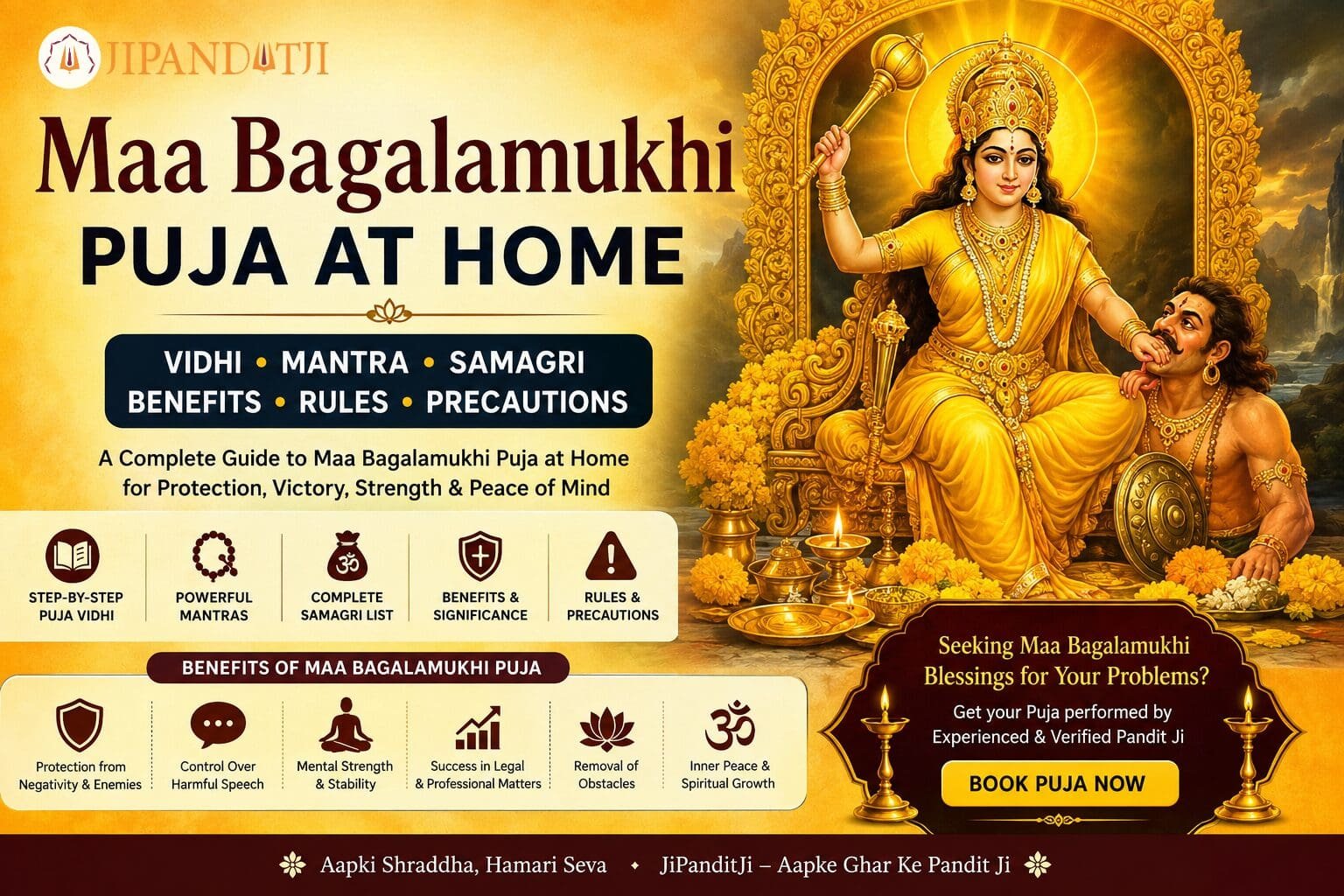
Who Is Maa Bagalamukhi?
Maa Bagalamukhi is traditionally counted among the ten Mahavidyas — the ten great forms of divine feminine wisdom in the Shakta tradition. She is particularly associated with Stambhana, traditionally understood as the power to restrain or bring harmful speech, actions or influences under control.
This is why devotees facing conflict, fear, obstacles or situations demanding greater mental strength often turn to her worship. She is also popularly known as Pitambara or Pitambari, reflecting her strong traditional association with the colour yellow.
Bagalamukhi worship is often misunderstood as being only about defeating enemies — a broader devotional understanding seeks control over harmful influences, courage, mental steadiness and spiritual discipline.
BEFORE YOU BEGIN
Can You Perform Bagalamukhi Puja at Home?
Yes — a simple devotional puja can be performed at home. There is, however, an important distinction between ordinary devotional worship and advanced sadhana.
Simple Devotional Puja
- A clean puja space
- Maa Bagalamukhi's image
- Diya, dhoop, flowers, turmeric
- Akshat and bhog
- Simple prayer or naam smaran
Advanced Bagalamukhi Sadhana
- Specialised mantra prayoga
- Tantric sadhana & yantra practices
- Elaborate purashcharana
- Specific anushthans or sankalpas
- Should follow a Guru or lineage's rules
WHAT YOU'LL NEED
Bagalamukhi Puja at Home: Puja Samagri
You do not need an elaborate setup for a simple home puja.
| Puja Samagri | Traditional Use |
|---|---|
| Maa Bagalamukhi picture or murti | Main deity |
| Yellow cloth | For the puja altar |
| Haldi (turmeric) | Important traditional offering |
| Yellow flowers | Pushpa offering |
| Akshat (uncooked rice) | Offering |
| Diya | Deepa |
| Ghee or oil | For the diya |
| Dhoop/agarbatti | Dhupa |
| Gangajal or clean water | Purification and offerings |
| Fruits | Naivedya |
| Yellow sweets | Bhog |
| Moli/Kalava | Traditional puja use |
| Puja thali | Arranging the samagri |
| Mala | Optional for mantra or naam japa |
Tip: Do not become anxious if you do not have every item. Devotion, cleanliness and sincerity matter more than an unnecessarily complicated ritual.
THE RITUAL
Puja Vidhi — Step by Step
- 1. Clean yourself and the puja space — bathe or wash hands/feet; keep the space peaceful.
- 2. Prepare the puja altar — yellow cloth if available, image and samagri arranged around it.
- 3. Light the diya and dhoop — settle your mind before the main prayer.
- 4. Take a simple sankalp — state your intention, focused on protection and dharma, never harm.
- 5. Offer haldi and flowers — yellow flowers, turmeric and akshat, calmly and without rushing.
- 6. Offer bhog — fruits or a vegetarian sweet, ideally yellow-coloured.
- 7. Perform mantra or naam japa — follow your Guru's instructions, or simple naam smaran.
- 8. Offer your prayer — sincerely, for strength, protection, peace and wisdom.
- 9. Perform aarti — using a Devi aarti you already know.
- 10. Pranam and prasad — final pranam, gratitude, and respectful prasad.
SACRED SOUND
Maa Bagalamukhi Mantra
One widely circulated traditional Mool Mantra is:
Om Hleem Bagalamukhi Sarvadushtanam Vacham Mukham Padam Stambhaya, Jihvam Keelaya Buddhim Vinashaya Hleem Om Swaha.
Traditionally associated with restraining harmful speech, actions and negative influences.
Should beginners chant the Mool Mantra? Different lineages take different approaches. If you’ve received mantra diksha from a Guru, follow that lineage’s instructions. If you’re completely new to Bagalamukhi worship, begin with simple devotional prayer rather than experimenting with complex mantra sadhana.
TIMING
When Is This Puja Performed?
Bagalamukhi Jayanti
The occasion most specifically associated with her worship.
Tuesdays
Traditionally associated with Devi and Shakti worship.
Navratri
An important period for Devi worship more broadly.
Har Puja ke liye koi bhi Pandit nahi — us Puja ke Visheshagya Pandit Ji.
For a specific Anushthan, Sankalp or Muhurat, JiPanditJi ensures that your Puja is performed by the Visheshagya Pandit Ji for that particular ritual, following the appropriate traditional vidhi.If you have a question about your Puja or Muhurat, you can simply talk to us on WhatsApp.
TRADITIONAL BELIEFS
Benefits of Maa Bagalamukhi Puja
Protection
Blessings for protection from harmful influences and difficult circumstances.
Mental Strength
A structured way to cultivate courage, discipline and steadiness.
Control Over Speech
Meaningful for devotees dealing with conflict or harsh communication.
Overcoming Obstacles
Sought during professional challenges or prolonged difficulties.
Inner Stability
Prayer and mantra practice as part of a disciplined spiritual routine.
Victory Through Dharma
Strength and wisdom to overcome challenges while staying aligned with dharma.
CHOOSING CORRECTLY
Bagalamukhi Puja and Other Traditional Remedies
Not every difficulty requires the same puja. The appropriate ritual depends on the nature of the concern, your tradition and sometimes your horoscope.
Seeking Shiva's blessings or peace?
Explore Rudrabhishek Puja — benefits, vidhi, samagri, mantra and auspicious timing.
Concerned about Mangal Dosha?
Start with the Mangal Dosha & Angarak Yoga Calculator rather than assuming a remedy.
Mars-related worship at Ujjain?
Learn about Angareshwar Mahadev Mandir and Mangal/Angarak Dosha Puja.
Santaan Gopala Puja for Parenthood Blessings?
Traditionally performed by devotees seeking Shri Krishna’s blessings for family, parenthood and the well-being of children.
The right spiritual remedy should be connected to the nature of the concern — not simply chosen because a particular puja is trending online.
COMMON PITFALLS
Mistakes to Avoid
- Confusing a simple puja with advanced tantric sadhana
- Using mantras without understanding them or Guru guidance
- Performing the puja with intent to harm someone
- Chasing guaranteed results from any spiritual practice
- Becoming obsessed with ritual perfection over sincerity
- Combining random instructions from unrelated internet sources
DEVOTEE QUESTIONS
Frequently Asked Questions
Yes. A simple devotional puja can be performed at home with an image of Maa Bagalamukhi, diya, flowers, turmeric, bhog and sincere prayer.
Yellow is traditionally associated with her, and she is also known as Pitambara or Pitambari.
Yellow flowers are commonly associated with her worship, though exact offerings can vary by tradition.
Yes. Beginners can approach her through simple devotional prayer. Advanced mantra sadhana should not be confused with ordinary home worship.
Yes, women can perform devotional worship. Specific rules for specialised practices may vary between traditions.
Bagalamukhi Jayanti is an important occasion. Tuesdays and Navratri are also observed in various traditions.
Common traditional offerings include turmeric, yellow flowers, akshat, fruits, sweets, diya and other basic puja samagri.
No. Simple devotional puja is different from specialised mantra or tantric sadhana, which may involve specific rules, initiation and guidance.
Want Maa Bagalamukhi Puja Performed by a Pandit Ji?
Aapko har ritual ke liye koi bhi Pandit nahi — us Puja ke Visheshagya Pandit Ji.
JiPanditJi mein aapki Puja usi ritual ke Visheshagya Pandit Ji dwara, uchit traditional vidhi ke anusaar karayi jaati hai.
JiPanditJi — Aapke Ghar Ke Pandit Ji